
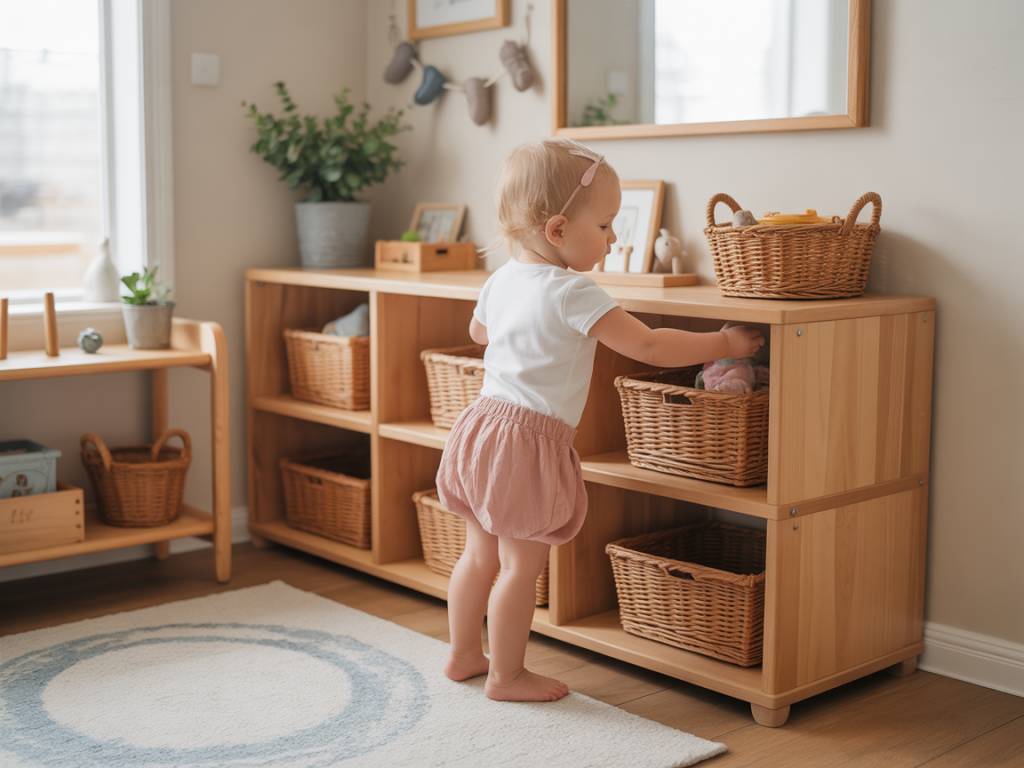
A Montessori-inspired entryway can do more than make a home feel organized. It can become a daily practice space where toddlers learn to take part in family routines, make simple choices, and build confidence through repetition. For parents searching for practical Montessori home ideas, the entryway is one of the best places to start. It is visible, used every day, and naturally connected to independence.
In Montessori education, the environment is designed to support the child. That means everything has a purpose, everything is reachable, and everything invites participation. A toddler-friendly entryway follows the same principle. Instead of a crowded bench, high hooks, and adult-only storage, the space should be calm, functional, and scaled to a child’s size. The result is a more peaceful start and end to the day.
Why a Montessori-Inspired Entryway Supports Toddler Independence
Young children thrive when they can do things for themselves. This is especially true during daily transitions, when they are putting on shoes, hanging up a coat, or choosing what to carry outside. A Montessori entryway gives toddlers real responsibility in a manageable format. It teaches practical life skills in a place they already use several times each day.
This kind of setup also reduces frustration. When a child can see their belongings, reach their hooks, and access their shoes without constant adult help, they are more likely to cooperate. The entryway becomes a space for independence rather than a bottleneck of stress. Over time, that small shift can have a big impact on family routines.
For many families, a Montessori-inspired entryway also supports the development of executive function. Toddlers begin to understand sequence, organization, and cause and effect. They learn that shoes go near the door, coats belong on hooks, and hats have a designated place. These are simple habits, but they create structure. And structure helps children feel secure.
Start with a Child-Sized Entryway Layout
The first step in designing a toddler-friendly entryway is to lower the environment to the child’s level. This does not mean recreating the entire hallway. It means identifying the parts of the space your toddler uses most and making them accessible. The goal is ease, not excess.
A child-sized layout typically includes a low hook, a small bench or stool, a basket for shoes, and perhaps a mirror at toddler height. Each element should be easy to understand. Keep the arrangement simple. Children respond best when the space is clear and predictable.
If your entryway is small, that is not a problem. A Montessori setup can work in a narrow hallway, a mudroom corner, or even just one wall near the front door. The key is intentionality. A few well-chosen pieces often work better than a large, crowded storage system.
- Install one or two low hooks for coats and bags.
- Place a bench, stool, or low seat for shoe removal.
- Use a basket or tray for everyday shoes.
- Add a child-height mirror to encourage self-awareness.
- Keep a small bin for seasonal accessories such as hats or mittens.
Choose Practical Montessori Entryway Furniture and Storage
When shopping for Montessori furniture for the entryway, think in terms of function, durability, and accessibility. A toddler does not need decorative storage that is difficult to open. They need containers and furniture that support independent use. That may include open baskets, low shelves, and sturdy hooks fixed securely to the wall.
Open storage is especially useful because toddlers can see what belongs where. Visual access supports independent decision-making. It also makes cleanup easier. A shoe basket or shallow bin can teach children where items belong without requiring them to manage complicated lids or labels they cannot yet read.
Materials matter too. Natural textures, neutral colors, and simple shapes often work well in a Montessori home. They create visual calm. They also help the child focus on the task instead of the clutter. That said, the best entryway is one that fits your family’s needs and can withstand daily use.
- Low wooden benches provide a stable place to sit while putting on shoes.
- Wall-mounted hooks at toddler height support coat hanging and bag storage.
- Woven baskets and felt bins work well for soft accessories.
- A narrow shelf can hold slippers, indoor shoes, or a small change tray.
- A mirror at eye level can encourage dressing awareness and self-checking.
Create a Toddler Entryway Routine That Builds Daily Independence
A Montessori-inspired entryway works best when it is paired with a routine. Children learn through repetition. They also learn through sequence. If the space is arranged well but the process is inconsistent, toddlers may still struggle to use it independently. A simple routine solves that problem.
Keep the routine predictable and brief. For example, when arriving home, your toddler might take off shoes, place them in the shoe basket, hang their coat on the low hook, and wash hands. When leaving, the order might be shoes, coat, bag, and then a final check in the mirror. Repeating the same steps every day helps the child remember what to do next.
Use clear language. Short, direct phrases are often easiest for toddlers to follow. You can say, “Shoes in the basket,” or “Coat on the hook.” Over time, your child may begin to take the lead. That is the Montessori goal. Support first. Independence later.
Use Montessori Principles to Reduce Clutter in the Entryway
Clutter can make a child’s environment harder to navigate. In an entryway, too many shoes, too many coats, and too many objects competing for attention can become overwhelming. A Montessori approach prioritizes order and simplicity. Each item should have a home.
Begin by deciding what truly belongs in the entryway. Everyday shoes, outerwear, and a few seasonal essentials are enough for most families. Rarely used items can be stored elsewhere. This keeps the area calm and manageable for young children. It also makes it easier for adults to maintain.
Consider rotating storage by season. In winter, mittens and hats may need more space. In summer, a sunhat and sandals may be enough. Seasonal rotation keeps the system practical and prevents the toddler from having to sort through unnecessary items. Fewer choices can mean more success.
- Limit visible items to those used daily.
- Store outgrown shoes and off-season accessories elsewhere.
- Use labeled bins for family items if more than one child shares the space.
- Keep the floor as clear as possible to support easy movement.
- Review the setup regularly as your toddler grows and gains new skills.
Make the Entryway Accessible for Dressing and Undressing
One of the most useful features of a toddler-friendly entryway is the ability to dress and undress independently. This is a core Montessori practical life activity. It teaches coordination, patience, and problem-solving. It also gives children a real role in the daily rhythm of home life.
A small bench makes a major difference here. Sitting down to remove shoes is easier than balancing on one foot. A low stool can also work if space is tight. If your toddler is practicing zippers, buttons, or Velcro fasteners, keep jackets and footwear simple enough for them to manage with minimal help.
You may also want to provide a tiny basket for items that come on and off frequently. A scarf, a rain hat, or indoor slippers can live there. This prevents items from being dropped randomly and helps your child understand where personal belongings belong. The process becomes part of their routine instead of a parent-only chore.
Add a Few Thoughtful Montessori Entryway Accessories
Accessories should support function, not distract from it. In a Montessori-inspired entryway, less is often more. Still, a few well-chosen additions can make the space more inviting and useful. The right accessories help a toddler connect with the environment and feel ownership over it.
A small mirror is a strong choice. It helps toddlers recognize themselves, notice their clothing, and engage in self-care. A picture label can also be helpful, especially for pre-readers. For example, a photo of shoes on the shoe basket or a coat icon near the hook can reinforce where things belong without relying on text alone.
You might also include a seasonal basket for everyday outdoor essentials. For example, in rainy weather, a child can learn to place boots or a rain hat in one designated spot. In cold months, gloves and scarves can have a simple home. These small details make the environment easier to use and easier to maintain.
- Child-height mirror for self-checking and body awareness.
- Picture labels for non-readers.
- Small tray for keys kept out of child reach, if needed.
- Seasonal basket for hats, gloves, or sunglasses.
- Simple wall art or a calming print if the space feels visually bare.
How to Keep a Montessori Entryway Working Over Time
The best toddler entryway ideas are the ones that stay useful. That means the setup should change as your child grows. A hook that works for a two-year-old may need to move higher later. A bench may need more surface area once shoes get bigger. Montessori design is flexible, not fixed.
Observe how your child uses the space. If they consistently leave shoes on the floor, the basket may be too high or too small. If they cannot reach the hook, the placement may need adjustment. If the routine feels rushed, simplify it. Small improvements can make the system much more effective.
It also helps to involve your child in maintaining the space. Invite them to put away their own shoes, hang their own coat, and choose where a new item belongs. Children are more likely to respect an environment they help care for. This sense of participation is one of the most valuable parts of Montessori home organization.
A Montessori-inspired entryway is not just a design choice. It is an everyday tool for growing confidence, responsibility, and independence. With a few thoughtful changes, the front door area can become one of the most educational spaces in the home. Simple. Calm. Practical. And deeply supportive of a toddler’s need to do things for themselves.