


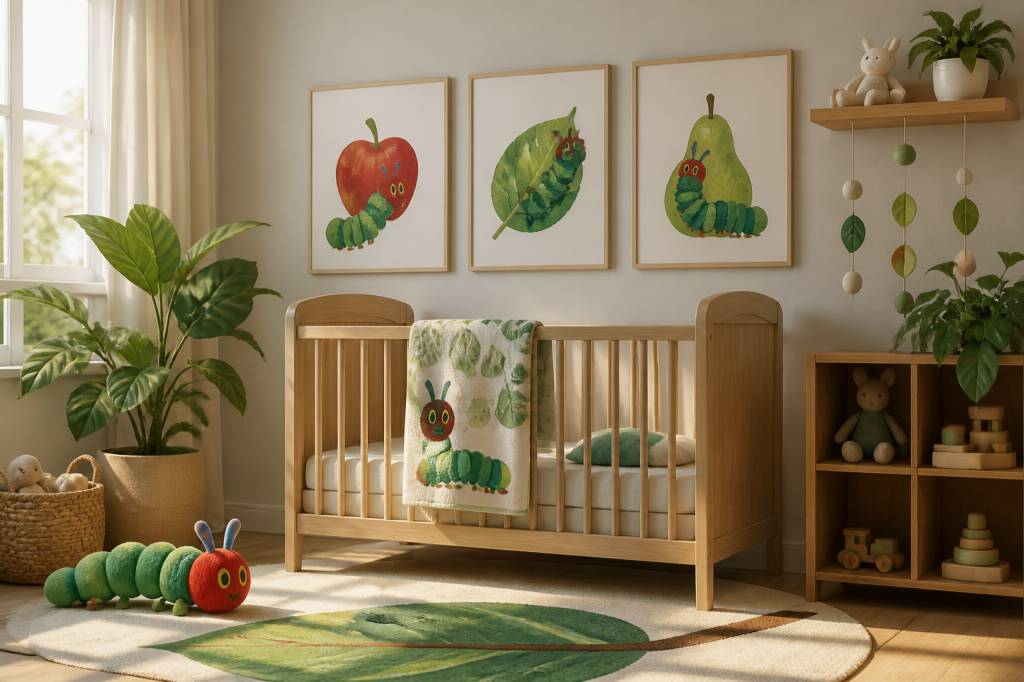
Some nursery themes arrive with a whisper; others come in with an appetite. The Very Hungry Caterpillar belongs firmly to the second group. There is something irresistible about its bright colors, playful rhythm, and gentle message about growth, change, and the beauty of small beginnings. For parents designing a nursery, it offers more than nostalgia. It offers a visual language that feels joyful, educational, and wonderfully comforting.
If you are looking for print ideas for nursery decor, this classic story opens the door to a room that feels both imaginative and soothing. It can be bold without becoming chaotic, sweet without feeling overly precious, and timeless enough to grow with your child. And honestly, isn’t that what we all hope for when decorating a baby’s first space? Something lovely today, but still meaningful a few years from now?
Why The Very Hungry Caterpillar works so well in a nursery
Before choosing prints, it helps to understand why this theme resonates so deeply. Eric Carle’s artwork is instantly recognizable: collage textures, rich primary colors, soft organic shapes, and an overall sense of movement. In a nursery, these elements do something special. They stimulate visual interest for a baby while still feeling gentle enough for rest.
The story itself also carries a subtle educational layer. It touches on counting, days of the week, food, transformation, and the life cycle of a butterfly. That means your nursery decor can do more than look cute. It can quietly support early learning from day one. And for many parents, that balance between beauty and purpose feels just right.
Another reason this theme lasts? It grows with your child. A tiny baby may simply enjoy the colors and shapes, while an older toddler will recognize the caterpillar, remember the story, and start pointing out fruit, butterflies, and numbers. Decor that can evolve with your child saves both money and redecorating stress, which is always a welcome gift in motherhood.
Classic book-inspired prints that always feel right
When people think of The Very Hungry Caterpillar, they often picture the most iconic images from the book. These make excellent nursery prints because they are familiar, cheerful, and easy to style in many ways.
A print of the caterpillar itself is the obvious starting point. Choose one with a soft white background if you want a cleaner, more modern look, or a richly colored version if you want the artwork to become a focal point. The caterpillar alone can add personality without overwhelming the room.
Another lovely option is a print featuring the butterfly. This works beautifully above a crib, changing table, or reading nook because it brings a sense of transformation and calm. It can also symbolize growth, which feels especially meaningful in a baby’s room.
Fruit illustrations are another charming choice. Apples, pears, plums, strawberries, and oranges from the story can be arranged as a series of prints or grouped together in one larger composition. These are especially effective if you want a nursery that feels playful but not too themed.
For parents who love a more storybook approach, a print of the caterpillar’s journey across the days of the week can be both decorative and educational. It adds structure to the wall while gently introducing early concepts like sequence and repetition.
Print styles to suit different nursery moods
Not every nursery needs to look like a page lifted directly from the book. The beauty of this theme is that it can be interpreted in many different styles, from soft and minimal to bright and lively.
If your taste leans modern, look for simplified line art or watercolor prints inspired by the caterpillar and butterfly. These versions often use more negative space, which keeps the room airy and uncluttered. Pair them with light wood furniture and neutral textiles for a calm, contemporary feel.
If you love color, lean into the story’s signature palette. Red, green, yellow, blue, and a touch of orange can create a nursery that feels full of energy and joy. The key is to distribute the colors thoughtfully. Rather than painting every wall bright, use prints to introduce the palette in a controlled way.
For a softer nursery, choose pastel reinterpretations of the classic imagery. A muted caterpillar print in sage, dusty blue, or pale terracotta can feel more restful while still honoring the original story. This approach works particularly well in small spaces where you want visual charm without too much intensity.
There is also a lovely vintage route. Some parents choose prints that feel like old storybook illustrations, with textured backgrounds, aged paper tones, and a sense of nostalgia. These can make the nursery feel warm and layered, almost like a treasured childhood memory passed down through time.
How to use prints in the room without overdoing the theme
One of the easiest decorating mistakes is loving a theme a little too much. We have all been there, standing in a nursery with one more caterpillar pillow or one more butterfly decal and thinking, surely this is still tasteful. The trick is restraint. Let the prints carry the theme, then allow the rest of the room to breathe.
A good rule is to choose one main visual story. Maybe it is the caterpillar’s transformation. Maybe it is fruit and counting. Maybe it is the butterfly motif. Once you decide, let the prints do the heavy lifting and keep furniture and textiles relatively simple.
Here are a few ways to keep the balance right:
- Use one large statement print above the crib instead of several competing pieces.
- Mix themed prints with neutral artwork, such as soft patterns or abstract shapes.
- Repeat only two or three core colors throughout the room.
- Choose natural materials for furniture and storage to ground the bright artwork.
- Leave some walls empty so the room feels peaceful, not crowded.
This approach lets the nursery feel intentional rather than overly busy. Babies do not need a room that is trying to do everything at once. They need a space that feels secure, welcoming, and visually gentle.
Print placement ideas that make the room feel complete
Where you hang the prints matters just as much as what you choose. A thoughtful placement can make even a simple artwork feel designed with care.
Above the crib is the most natural focal point, but be sure the print is securely framed and safely out of reach. A single large caterpillar or butterfly illustration can anchor the room beautifully.
Above a dresser or changing table, a series of smaller prints works well. You might place one print with the caterpillar, one with fruit, and one with the butterfly. This creates a visual story without overwhelming one area.
If you have a reading corner, consider using prints that echo the learning spirit of the book. A days-of-the-week print, a count-to-five fruit series, or a simple alphabet-inspired version can make the corner feel playful and educational at once.
Gallery walls can work too, especially if you want a slightly more curated look. Just keep the arrangement balanced. For example, a central caterpillar print surrounded by two smaller complementary prints can create harmony. The goal is not to fill every inch, but to create a quiet rhythm on the wall.
Printable art ideas that feel personal and practical
Printable nursery art is especially appealing because it is affordable, flexible, and easy to refresh as your child grows. For a theme like The Very Hungry Caterpillar, printables also make it easy to personalize the room without committing to expensive custom decor.
Consider prints that include your baby’s name or birth details in a subtle way. A personalized poster with a caterpillar illustration and your child’s name can feel special without becoming overly sentimental. If you prefer something more understated, you could add a small line of text such as “grow, little one” or “little caterpillar, big dreams.”
Educational printables are another excellent choice. Simple counting cards, fruit labels, or day-of-the-week posters can be integrated into the nursery decor while also becoming useful later during toddler years. This is one of those rare parenting wins where decor and development are on the same team.
If you enjoy changing decor with the seasons, printable art gives you freedom. You might use brighter fruit prints in spring, a butterfly-focused design in summer, and a softer transformation-inspired piece in autumn. The nursery can evolve without needing a full makeover.
Framing and materials that elevate the look
Even the sweetest print can lose its charm if the frame feels disconnected from the room. A thoughtful frame choice helps the artwork feel polished and cohesive.
For a classic nursery, white frames are a safe and beautiful choice. They keep the focus on the artwork and blend well with both colorful and neutral spaces. Light wood frames add warmth and pair especially well with natural furniture. If your nursery has a more modern aesthetic, thin black frames can create crisp contrast and make the illustrations pop.
Matting can also make a difference. A wide white mat gives smaller prints breathing room and makes them look more elevated. This is especially helpful for storybook illustrations, which often contain a lot of delightful detail. When the art has space around it, the eye can appreciate it more fully.
For materials, think about the room’s overall feel. Soft cotton textiles, woven baskets, and unfinished wood keep the space grounded, allowing the colorful prints to shine without feeling harsh. The caterpillar theme can be joyful, but the rest of the nursery should still invite calm.
Pairing prints with furniture and decor
The best nursery design is rarely built around one object alone. It is built in layers. Prints are one layer, but they come alive when paired thoughtfully with furniture and accessories.
If your furniture is simple and neutral, your prints can provide the playful energy. A white crib, pale dresser, and natural rug give the artwork room to stand out. Add just a few themed touches, such as a caterpillar-shaped cushion or a butterfly mobile, and the room will feel complete.
If the room already includes colorful bedding or patterned wallpaper, keep your prints more subdued. In that case, choose softer illustrations or a limited-color palette so the space does not become visually noisy.
It is also worth thinking about texture. A nursery feels richer when prints are balanced with tactile elements like knit blankets, linen curtains, and soft rugs. This keeps the room from feeling flat, especially when the artwork is bright and graphic.
Ideas for a nursery that grows with your child
One of the quiet challenges of nursery design is trying to create something that feels precious now but not childish later in a way you will regret. A Very Hungry Caterpillar theme lends itself beautifully to this challenge because it already contains a message of growth.
You can start with prints that are clearly story-inspired during infancy, then gradually move toward more educational or nature-based artwork as your child grows. For example, a caterpillar and butterfly print might later be joined by botanical prints, insect studies, or simple alphabet artwork in the same color family.
If you choose quality frames and a cohesive palette, the room can mature without a complete reset. That means less pressure on you and more continuity for your child. And children notice continuity in comforting ways, even when they cannot yet explain it.
There is something lovely about a nursery that feels alive in this way. The same caterpillar that once decorated the wall during midnight feedings can later become part of a child’s first stories, first words, and first questions about how a tiny creature becomes something beautiful. That is not just decor. That is memory-making.
Thoughtful print ideas to inspire your nursery
If you are ready to start planning, here are a few print directions that work especially well for this theme:
- A large watercolor caterpillar print with a soft white background.
- A butterfly illustration in muted tones for a calming focal point.
- A fruit series featuring the foods from the story in a matching style.
- A days-of-the-week print that doubles as early learning decor.
- A personalized name print with a tiny caterpillar detail.
- A minimalist collage inspired by the story’s iconic textures and colors.
- A framed quote from the book, kept simple and elegant.
- A small gallery wall combining caterpillar, fruit, and butterfly imagery.
The most important thing is not choosing the trendiest version. It is choosing the version that feels gentle to you. A nursery becomes beautiful when it reflects love, not pressure.
And perhaps that is why The Very Hungry Caterpillar remains such a beloved source of inspiration. It honors transformation without rushing it. It reminds us that growth takes time, that small beginnings matter, and that even the simplest details can become part of a child’s story.
So if you are gathering print ideas for nursery decor, start there. Choose the image that makes you smile when the room is quiet. Choose the colors that soothe you on tired days. Choose the artwork that feels like a promise: that your baby’s world can be bright, safe, and full of wonder.