


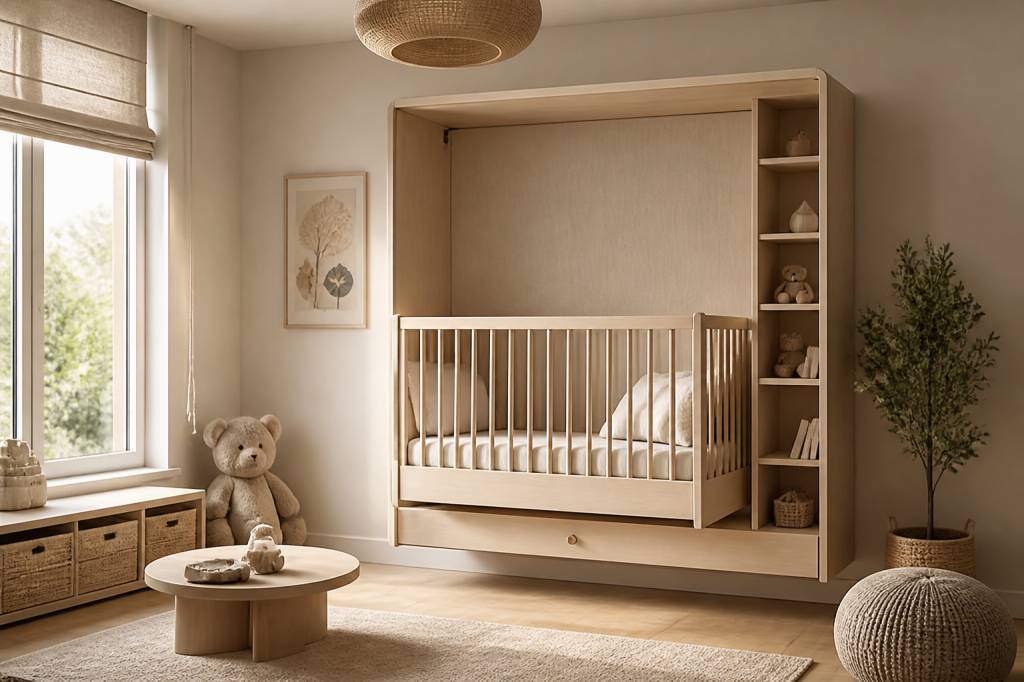
When you’re planning a nursery, it’s easy to imagine a soft little room with a rocking chair, a dresser, a bookshelf, and a crib sitting peacefully in the middle of it all. Then reality arrives with a measuring tape. Maybe the nursery is a converted office, a corner of your bedroom, or a tiny room with one awkwardly placed window. Suddenly, every inch matters.
That’s where wall crib ideas can be a quiet lifesaver. A crib placed thoughtfully against the wall, or built to work with the architecture of a small room, can open up floor space and make the nursery feel calmer, lighter, and much more functional. And when you’re caring for a baby, a calmer room often means a calmer parent too.
If you’re working with a small nursery, you do not need to give up on beauty or comfort. You simply need to choose pieces that work harder and design choices that make the room feel spacious without sacrificing warmth. A wall crib setup can do exactly that.
Why a wall crib works so well in a small nursery
A crib placed against the wall may sound obvious, but in a small room, placement is everything. The goal is not just to “fit” the crib in. The goal is to create breathing room around it. Babies may be tiny, but their gear seems to multiply overnight. A smart crib position can help contain the visual clutter and make the nursery feel more intentional.
Wall cribs are especially helpful when you need to preserve open floor space for movement, storage, or a nursing chair. They can also help define zones in a room that serves more than one purpose. If your nursery doubles as an office or guest room, having the crib anchored neatly along one wall can keep the layout from feeling chaotic.
There is also a psychological benefit. A nursery that feels organized tends to feel more restful. And in those sleepy early months, restful is worth its weight in gold.
Choose the right crib size for the space
Before thinking about décor, start with proportions. In a small nursery, a crib that is too bulky can dominate the room. A lighter visual footprint can make a surprising difference.
Here are a few options to consider:
- Standard crib with slim lines: A traditional crib with a simple frame often works best if you want something timeless without the visual heaviness.
- Mini crib: A mini crib is ideal for very small rooms or for babies who will transition later to a larger space.
- Convertible crib: A crib that grows with your child can be practical if you want to avoid replacing furniture too soon.
- Wall-mounted or fixed-position crib setups: In some custom nursery designs, the crib area is planned around built-in wall features for a seamless look.
If you are choosing between a larger crib and a mini crib, think honestly about the room you have, not the room you wish you had. There is something comforting about accepting the size of the space and designing beautifully within it. That small shift in mindset can save a lot of stress later.
Use the wall to create a clean visual line
One of the easiest ways to make a small nursery feel bigger is to keep the major furniture pieces aligned. A crib placed flush against a wall creates a clean line that helps the room feel structured rather than crowded. If possible, avoid placing the crib in the center of the room unless you are working with a very specific layout.
When a crib sits along the wall, you can build the rest of the nursery around it. A narrow dresser across from it, a compact chair in the corner, or a floating shelf above the changing area can all work together without competing for attention.
Try to leave enough space around the crib so that you can move comfortably and safely. A small room should still feel easy to navigate, especially during those half-asleep nighttime check-ins when nobody wants to bump a shin on a toy basket.
Think vertically, not just horizontally
Small nurseries reward vertical thinking. When floor space is limited, the walls become your best friends. This is where a crib-and-wall strategy really shines.
Instead of adding more furniture, consider using the wall above and beside the crib to store or display only what you truly need. The key is to keep it calm, not cluttered.
- Floating shelves: Great for books, a baby monitor, or a small basket of essentials.
- Wall-mounted storage bins: Useful for diapers, burp cloths, or spare pacifiers.
- Hooks: Handy for swaddles, changing bags, or a favorite baby blanket.
- Wall art: A few simple pieces can add softness without taking up any floor space.
One word of caution: anything mounted above the crib should be securely installed and placed with safety in mind. Keep décor light and avoid anything that could fall. A beautiful nursery should still be a safe nursery, always.
Use a corner crib layout when the room is awkwardly shaped
Not every nursery comes in a neat square. Some have slanted ceilings, extra doors, or oddly placed windows that make layout planning feel like a puzzle. In those rooms, a corner crib placement can be incredibly effective.
By placing the crib in a corner, you can free up the main wall for storage or a changing table. This layout can also make the room feel a little more intimate, which can be lovely in a nursery. Babies often feel calmer in spaces that feel enclosed and cozy rather than oversized and echoey.
If you go with a corner layout, pay attention to access. You’ll want enough room to reach the crib easily from at least one side. You may also want to keep the area around it visually simple, so the nook feels intentional instead of squeezed in.
Pair the crib with smart storage
In a small nursery, storage is not an afterthought. It is part of the design. A wall crib setup becomes much more practical when the surrounding storage is compact and well chosen.
Think in terms of what you use daily versus what you only need occasionally. The daily items should be easy to reach. The rest can live up high, down low, or in closed storage to keep the room visually peaceful.
- Under-crib storage: Baskets or low-profile bins can hold extra bedding or outgrown clothes.
- Narrow dresser: A slim dresser can serve as both storage and changing surface.
- Closet organizers: Hanging shelves and dividers help maximize every inch inside a small closet.
- Rolling cart: A small cart can act as a mobile station for diapers, wipes, lotion, and swaddles.
There is a lot to be said for a nursery where everything has a place. Not because it needs to look perfect, but because a tidy room can make those sleepless days feel just a little more manageable.
Keep the palette light, but not cold
Light colors are often recommended for small rooms because they reflect light and make the space feel more open. That advice still holds true, but a nursery should not feel sterile. The goal is softness, not sameness.
Warm whites, pale beige, muted sage, dusty blue, and gentle blush can all work beautifully around a crib wall. These shades create a calm backdrop while keeping the room from feeling too busy. If you love color, you do not need to avoid it entirely. Use it thoughtfully in accents such as a rug, cushion, curtain, or framed print.
Texture matters just as much as color. A woven basket, a soft curtain, a knitted blanket, or a wool rug can add warmth and depth without crowding the room. A small nursery benefits from layers that feel cozy but controlled.
Choose wall décor that supports the layout
Wall crib ideas are not only about function. They are also about creating a room that feels gentle and complete. The right wall décor can make a small nursery feel polished without overwhelming it.
Above or near the crib, choose a few simple elements rather than many small ones. Too many pieces can make a tight room feel busy, even if each item is lovely on its own.
- One larger piece of art: This often works better than several tiny prints.
- Name signs or subtle lettering: Sweet, personal, and easy to keep minimal.
- Fabric wall hangings: Softens the room and adds texture.
- Gallery ledges: Great if you like swapping out art without new nail holes every month.
If you are the kind of parent who loves to rearrange things at 10 p.m. while the baby sleeps, wall-mounted décor with some flexibility can be a wonderful choice. A nursery does not need to be fixed forever. It just needs to work for the season you are in.
Make lighting part of the wall plan
Lighting can dramatically affect how a small nursery feels. A crib placed near a wall can benefit from thoughtful lighting that adds comfort without taking up surface space.
Wall sconces are a beautiful space-saving option, especially if you want to keep the dresser and changing table clear. A small plug-in wall light can provide enough glow for late-night feeds without filling the room with a harsh overhead brightness.
Other helpful lighting ideas include:
- Dimmer switches: A simple way to shift the mood of the room as needed.
- Soft lamp lighting: Works well on a dresser or shelf if you have space.
- Warm-toned bulbs: Create a gentler feel than bright white light.
Think of lighting as part of the nursery’s calm. You want enough visibility for diaper changes and sleepy check-ins, but not so much brightness that everyone feels they have entered a tiny operating room.
Use multipurpose furniture wherever possible
When a nursery is small, every item should earn its place. That does not mean you should fill the room with complicated solutions. It simply means choosing pieces that can do more than one job.
A changing dresser, for instance, can save space better than a separate changing table. A compact armchair with hidden storage can help keep blankets nearby. A small bookshelf can hold board books and baskets, keeping the nursery useful without overcrowding it.
Before buying anything, ask yourself a simple question: Will this still work when the baby grows? In many small rooms, the best pieces are the ones that remain useful long after the newborn stage has passed.
Plan for movement, not just style
A beautiful nursery is lovely. A nursery you can move through at 2 a.m. while half awake is better. When thinking about wall crib placement, remember that the room needs practical flow.
Consider how you will move from the door to the crib, from the crib to the changing area, and from the chair to the storage. If possible, keep those paths clear. The room may be small, but it should still feel easy to use.
One helpful approach is to sketch the room on paper before moving anything in. Mark the door swing, window placement, outlets, and closet access. It sounds simple, but it can prevent a lot of “Why is this crib suddenly in the way of the closet?” moments.
Simple wall crib ideas that work in real life
If you are looking for practical layouts, here are a few that tend to work especially well in small nurseries:
- The wall-and-dresser combo: Crib on one wall, narrow dresser opposite, small chair in the corner.
- The corner nook: Crib placed in a corner with floating shelves above and a soft rug below.
- The bedside nursery blend: For room-sharing, a crib or mini crib against the wall beside your bed with a compact storage cart nearby.
- The minimalist wall setup: Crib, one piece of artwork, one shelf, and one storage basket cluster. Clean, simple, and calm.
These layouts are flexible, which is exactly what a small nursery needs. You are not trying to impress anyone with square footage. You are trying to build a room that supports your daily life with a baby.
A small nursery can still feel deeply special
There is a tenderness in creating a nursery where space is limited but love is not. A wall crib idea is not simply a design trick. It is a way of making room for rest, routine, and the small rituals that shape early parenthood: the late-night sway, the careful swaddle, the morning stretch, the quiet glance at a sleeping baby.
When the room is designed with intention, even the tiniest nursery can feel peaceful and beautiful. You do not need every trend, every accessory, or every piece of matching furniture. You need smart choices, thoughtful placement, and a little grace for the realities of life with a baby.
And if the nursery still feels imperfect after all your planning? That is all right too. Often, the most loved rooms are the ones that hold a mix of practicality, tenderness, and a few well-earned signs of real family life.