
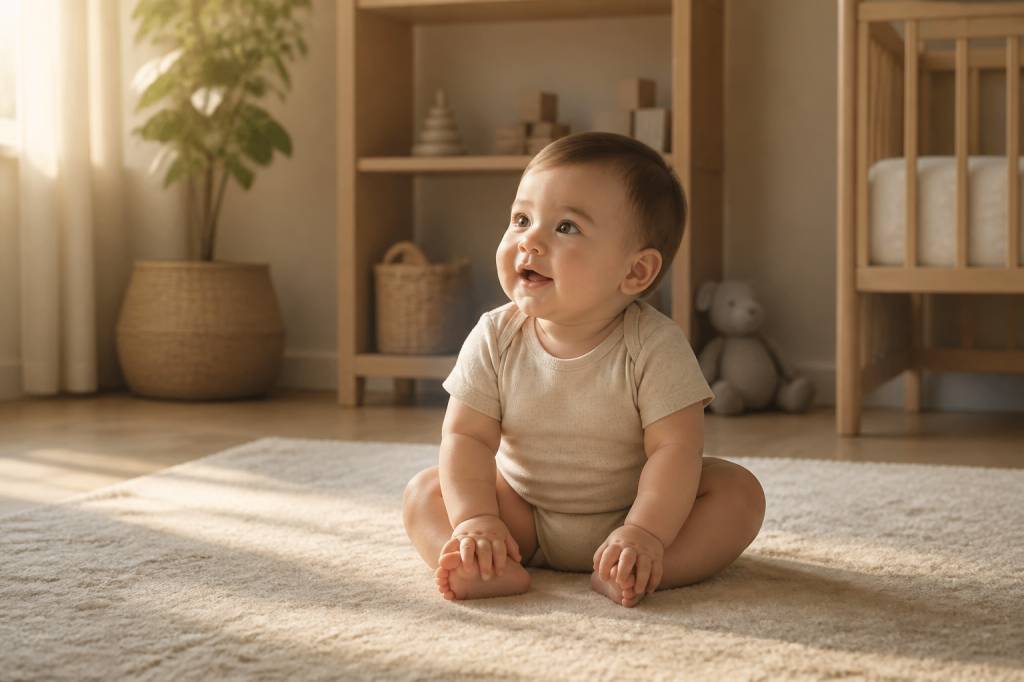
There is a particular kind of excitement in watching a baby discover sitting. One week, your little one seems to be a determined bundle of wobbles; the next, they are upright, wide-eyed, and suddenly able to see the world from a brand-new angle. Sitting opens the door to play, reaching, sharing meals, and exploring with greater independence.
It can also bring a few questions. When should a baby sit independently? Is it safe to place a baby in a sitting position? What should you do if your baby seems behind other children the same age? These are common concerns, and the answers are often gentler and less dramatic than the internet suggests.
Every baby develops at their own pace. The goal is not to rush the milestone, but to create a safe environment where strength, balance, and confidence can grow naturally.
When do babies usually learn to sit?
Most babies begin working seriously on sitting between four and seven months. At first, they may sit only briefly with support, often leaning forward on their hands. This is sometimes called “tripod sitting,” because the baby’s two hands and bottom create three points of contact with the floor.
By around six months, many babies can sit for short periods with support or with their hands placed in front of them. By approximately nine months, many can sit without support and move in and out of the position more confidently. These are broad developmental ranges, not deadlines.
A baby who sits independently at seven months is not necessarily more advanced than a baby who reaches the milestone at eight or nine months. Development is not a race, even though family group chats and carefully timed photographs can sometimes make it feel that way.
Premature babies may reach milestones according to their corrected age rather than their birth date. Your pediatrician can help you understand which timeline is most appropriate for your child, particularly if your baby was born significantly early.
What happens before independent sitting?
Sitting depends on more than strong abdominal muscles. Babies need to develop head control, shoulder stability, back strength, balance, and the ability to shift their weight. Their nervous system is learning how to coordinate all these skills at once.
Before sitting independently, you may notice several small but important steps:
- Your baby holds their head steady during tummy time and while being carried.
- They push up on their forearms or hands when lying on their tummy.
- They roll from tummy to back, back to tummy, or both.
- They reach for toys while lying down or supported in a seated position.
- They briefly hold themselves upright with their hands on the floor.
- They turn their torso or shift their weight to look at something interesting.
These movements may not look like a formal lesson in sitting, but they are all part of the preparation. A baby who reaches for a toy while balancing is practicing the same weight-shifting skills they will later use to sit, crawl, and eventually stand.
How can you help your baby learn to sit?
The most useful support is often simple: plenty of supervised floor time. Place your baby on a firm, clear surface where they can move freely. A play mat on the floor gives them an opportunity to roll, push, reach, and experiment without being restricted by seats or cushions.
When your baby is ready, sit on the floor facing them. Place your hands around their hips or lower ribs rather than pulling them forward by the arms. This allows your baby to feel their own balance while still giving gentle support.
You can also place a favorite toy just within reach. Keep it close enough that your baby can succeed, but far enough away to encourage a small shift in weight. If they topple, offer reassurance and try again later. Learning to sit involves plenty of amusing little face-plants, most of which are simply part of the process when your baby is on a safe, padded surface and fully supervised.
Short, frequent practice sessions are usually more effective than one long attempt. A few minutes after a nap or feeding may be enough. Stop when your baby becomes tired, frustrated, or hungry. Development grows best alongside comfort, not pressure.
Safe ways to practice the sitting position
Babies can fall suddenly, even when they appear steady. For practice, stay close enough to place a hand behind your baby immediately. Use a firm floor surface rather than a bed, sofa, or changing table. Soft furniture may seem protective, but it can allow a baby to roll into an unsafe position or fall from a greater height.
Surrounding your baby with firm cushions can provide a little protection during supervised play, but cushions should never replace an attentive adult. A baby can become trapped between pillows or slide into a position where breathing is restricted.
Keep the practice area away from stairs, cords, hot drinks, pets, and small objects. Once a baby can sit, they often become surprisingly effective at reaching. The remote control, a sibling’s tiny toy, and that one crumb you were certain had been cleaned up are suddenly fascinating treasures.
As your baby becomes more mobile, check the room from floor level. Look for coins, batteries, pen caps, food pieces, and anything small enough to fit through a toilet paper roll. Sitting is often the beginning of a much more active season of exploring.
Should you place your baby in a seated position?
Brief, supported sitting is generally fine when your baby has good head control and you are right beside them. You might sit your baby between your legs, support their hips with your hands, or offer a short practice session on the floor.
However, it is best not to leave a baby propped in a sitting position before they can get into and out of it themselves. If they lose balance, they may not have the strength or coordination to protect their head or move away from an unsafe position.
Try not to hold your baby upright for long periods in containers designed to position them. Floor play gives babies more opportunities to develop the muscles and coordination needed for independent movement. Equipment can be convenient, but it should not replace free movement and close interaction.
Baby seats, bouncer seats, and other positioning devices should always be used according to the manufacturer’s instructions and only while your baby is awake and supervised. They are not safe sleep spaces. If your baby falls asleep in one, move them to a firm, flat sleep surface on their back as soon as possible.
What about infant floor seats and sitting devices?
Some products are marketed as helping babies sit sooner. They may offer temporary support, but they do not necessarily teach the balance or strength needed for independent sitting. In some designs, a baby’s legs and hips are held in a fixed position, limiting the natural movements they need to practice.
If you use a supportive seat occasionally, treat it as a short-term convenience rather than a developmental tool. Keep it on the floor, never on a table or countertop, and remain within arm’s reach. Avoid placing it near stairs, water, heaters, or furniture from which a baby could climb or fall.
Most importantly, do not use any seat or container for sleep. A sitting position can allow a young baby’s head to fall forward, which may interfere with breathing. Safe sleep means placing babies on their backs, on a firm, flat, separate sleep surface that is free of pillows, loose blankets, and soft objects.
Sitting and starting solid foods
Sitting is also connected with readiness for complementary foods. A baby does not need to sit perfectly independently before trying solids, but they should have good head and neck control and be able to remain upright with support. They should also show other signs of readiness, such as bringing objects to their mouth and appearing interested in food.
When feeding, use an upright, stable high chair with a properly fastened safety harness. The chair should stand on a level floor and remain away from table edges, hot food, and dangling cords. Never feed a baby while they are reclined, lying down, walking around, or sitting in a moving stroller.
Stay with your baby throughout every meal. Gagging can be noisy and alarming but is a normal protective response as babies learn to manage new textures. Choking is often quiet and requires immediate action, so caregivers should learn age-appropriate infant choking first aid.
Introducing foods is not a test of sitting ability. If your baby becomes tired or slumps forward, end the meal and try again another time. A calm, supported posture is more important than finishing a certain amount of food.
Common mistakes parents can avoid
Many sitting worries come from perfectly understandable attempts to help. A few gentle adjustments can make practice safer and more enjoyable:
- Comparing babies too closely: Milestones have wide normal ranges. Focus on your baby’s progress rather than another child’s exact age.
- Practicing on high surfaces: A changing table, bed, or sofa can turn an ordinary wobble into a dangerous fall.
- Using pillows as a substitute for supervision: Pillows may shift, and babies can become wedged between them.
- Keeping babies in containers for much of the day: Babies need regular opportunities to move freely on the floor.
- Pulling a baby into sitting by the arms: Support the trunk and hips instead, and let your baby participate in the movement.
- Rushing after one wobbly attempt: A baby may sit briefly one day and seem less steady the next, especially when tired. Skills often appear unevenly before they become consistent.
When should you speak with a healthcare professional?
There is no single age at which every baby must sit independently. Still, it is worth discussing your child’s development with a pediatrician or health visitor if you notice concerns about muscle tone, movement, or loss of skills.
Seek professional advice if your baby has difficulty holding their head steady, seems unusually stiff or floppy, consistently uses one side of the body much more than the other, or does not show progress with supported sitting. You should also contact a healthcare professional if your baby loses a skill they previously had.
Some babies need extra support because of prematurity, illness, vision or hearing differences, or other developmental factors. Early guidance is helpful and does not mean that something is definitively wrong. It simply gives you and your baby the right tools sooner.
Making sitting a joyful part of the day
Learning to sit is not only a physical milestone; it is a new way for your baby to participate. They can watch you prepare breakfast, reach toward a favorite book, examine a toy from a different angle, and exchange smiles with a sibling. These ordinary moments are often where confidence quietly grows.
Get down on the floor with your baby. Offer a toy, sing a familiar song, and allow pauses for them to respond. Celebrate effort rather than perfection: a steady head, a successful reach, or a few seconds of balance all count. Your calm presence tells your baby that trying, wobbling, and trying again are safe.
With time, the supported position becomes a steadier one. Then your baby may lean forward, twist to reach a toy, and eventually move out of sitting altogether. The milestone will pass into the next adventure, as milestones tend to do. For now, enjoy this small and remarkable transformation: your baby is not just sitting up, but beginning to meet the world on their own terms.