
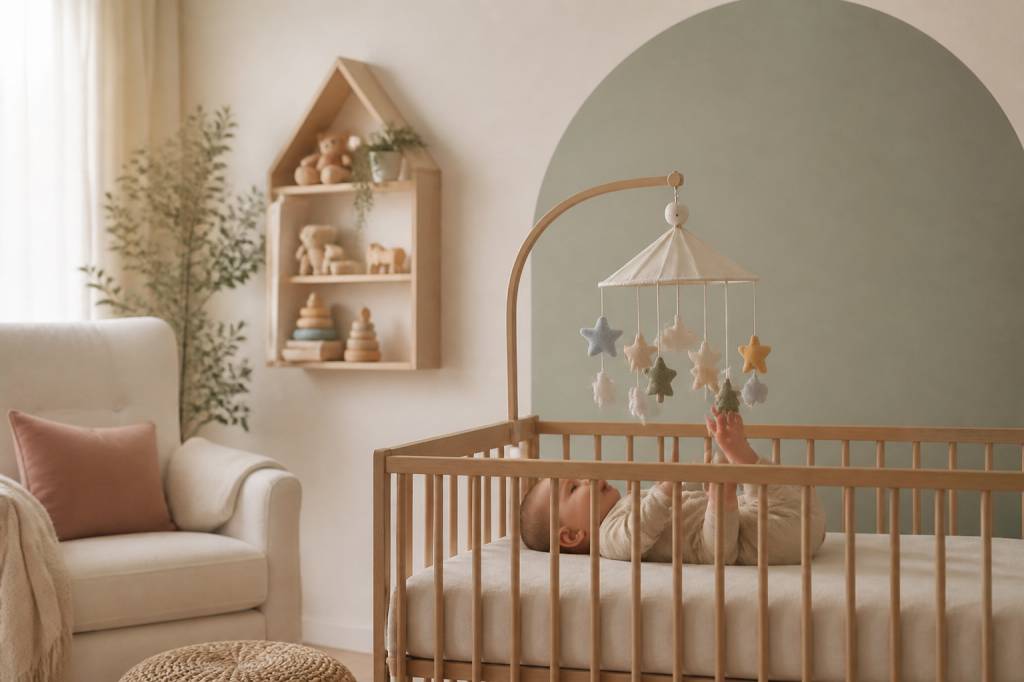
There is something quietly magical about a baby nursery when the details are chosen with care. The lighting is soft, the colors are gentle, and somewhere above the crib, a small mobile turns in the air like it has a secret. For many parents, that little motion becomes part of the room’s rhythm: a calming visual, a sleep cue, and sometimes the first object that truly seems to hold a baby’s attention.
Mobile toys are more than decoration. In the early months, they can support visual development, encourage tracking, offer soothing stimulation, and make the nursery feel like a place made for wonder. But with so many styles, materials, and features available, it can be surprisingly hard to choose the right one. Should it be musical or minimalist? Fabric or wood? High-contrast or pastel? The answer depends on your baby, your space, and the kind of atmosphere you want to create.
If you’ve ever stood in a nursery doorway at 2 a.m. wondering whether that tiny hanging cloud was “enough” or “too much,” you are not alone. Let’s look at thoughtful mobile toy ideas for baby nurseries that are both beautiful and practical.
Why mobiles still matter in the nursery
It’s easy to think of mobiles as a charming old-fashioned accessory, but they can serve a real purpose. Newborns spend a great deal of time looking, listening, and slowly learning how to focus. A mobile placed safely above a crib or changing area can provide gentle visual interest without overwhelming a baby’s developing senses.
In the first months, babies see best at close range and are drawn to movement and contrast. A slowly rotating mobile can help them practice tracking with their eyes. Over time, that simple visual pattern becomes part of early learning. And for parents, a mobile can create a soothing ritual: the same soft movement, the same familiar shapes, the same little pocket of calm each day.
That said, a mobile should never be treated as just one more pretty nursery item. Safety, age suitability, and placement matter just as much as style. A good mobile is a small design decision with a big impact.
What to look for before buying one
Before falling in love with a design, it helps to think about function. What do you want the mobile to do for your nursery, and for your baby?
- Safety: Make sure the mobile is securely mounted and kept out of reach. Once your baby can push up on hands and knees, or sit up, it should usually be removed from above the crib.
- Visual contrast: Newborns often respond well to bold shapes and simple patterns. High-contrast designs can be especially engaging in the early weeks.
- Movement: Gentle motion is calming. Overly fast spinning or noisy mechanisms can be overstimulating.
- Material: Wood, felt, fabric, and silicone each create a different mood. Choose what fits your nursery style and cleaning preferences.
- Sound: Some mobiles include music or nature sounds. These can be soothing, but not every baby likes them. Quiet can be just as powerful.
- Versatility: Some mobiles can later be used as nursery decor or repurposed for tummy time areas, which is a nice bonus.
If your nursery already has a lot of visual activity, a simpler mobile may be best. If the room is very minimal, the mobile can become the focal point that adds warmth and personality.
High-contrast black-and-white mobiles for newborn focus
In the earliest stage, black-and-white mobiles are often the most effective. Babies are naturally drawn to strong contrasts, and simple shapes can hold attention longer than busy patterns. Think circles, stars, arches, moons, and geometric forms hanging in a balanced arrangement.
This kind of mobile fits beautifully in modern nurseries, especially those with clean lines and soft neutrals. It can feel elegant without trying too hard, which is sometimes the best kind of baby decor, isn’t it? The nursery stays visually peaceful, but the baby still has something meaningful to observe.
Look for designs made with felt or lightweight wood. Some parents prefer monochrome mobiles because they feel timeless and work well whether the room leans Scandinavian, minimalist, or playful. As your baby grows, the stark contrast becomes less essential, but the mobile can still serve as a lovely visual centerpiece.
Nature-inspired mobiles that bring the outdoors in
There is a reason nature themes are so popular in baby nurseries. They feel soft, grounded, and comforting. A mobile with clouds, birds, leaves, rainbows, suns, or tiny animals can create a space that feels calm and alive at the same time.
These designs often work especially well for parents who want the nursery to feel gentle rather than theme-heavy. A mobile with wool clouds and tiny raindrops, for example, can add texture without making the room feel cluttered. A woodland mobile with foxes, owls, and mushrooms can bring a storybook quality to the room while still looking elegant.
Nature-inspired mobiles also tend to age well. They feel sweet for a newborn, but they do not become dated too quickly. If you’re designing a nursery with longevity in mind, this is a thoughtful path to consider.
Musical mobiles for soothing routines
Some babies love music from the very beginning. Others prefer the quiet hum of the room and would rather not have a tune playing every time they rest. Musical mobiles can be helpful, but the trick is choosing one with a gentle melody and using it intentionally.
A soft lullaby can become part of a sleep cue, signaling that it is time to slow down. When used consistently, a musical mobile may help create a predictable routine. Predictability is often reassuring for babies, and reassuring for parents too.
Still, not all music is created equal. A tune that sounds charming in the store may become less charming after the forty-seventh repeat. If possible, choose a mobile with a quiet, pleasant melody, or one with volume control. Better yet, test it before committing if you can. Babies are tiny, but their opinions are famously strong.
Handmade felt mobiles for softness and charm
Felt mobiles have become a favorite for good reason. They look tender and handcrafted, and they introduce texture in a way that feels warm rather than busy. Tiny felt animals, balloons, stars, or swans can float above the crib like a little dream.
One of the best things about felt is that it softens the nursery visually. If your furniture includes clean, sturdy pieces, a felt mobile can balance that structure with something more whimsical. It also pairs beautifully with categories like baby and furnitures when you want the room to feel both practical and nurturing.
Many handmade felt mobiles are customizable, which is useful if you want to match a particular color palette. Soft blush, ivory, sage, oatmeal, and dusty blue are popular for a reason: they’re gentle on the eyes and easy to coordinate.
Just be sure the mobile is well made. Loose stitching, small detachable pieces, or flimsy suspension can be a concern. The beauty of handmade items should always be matched with sturdy craftsmanship.
Wooden mobiles for a timeless nursery look
Wooden mobiles offer a clean, natural aesthetic that feels calm and refined. They are especially lovely in nurseries that already include wood furniture, woven baskets, or neutral textiles. The result is often a space that feels quietly intentional rather than overly decorated.
Shapes carved from wood or paired with simple natural fibers can create a balanced, Scandinavian-inspired look. These mobiles are a good choice if you prefer decor that feels mature enough to grow with your child. A wooden mobile can work for babyhood and still feel appropriate later as room decor.
They also tend to suit parents who want to avoid overly bright colors or character-based themes. There is a special kind of peace in a nursery that uses simple materials well. Not every room needs to announce itself. Sometimes it only needs to whisper.
Interactive mobiles that support early development
Some mobiles go beyond passive visual appeal and include features that encourage interaction. These may have removable toys, soft rattling elements, mirrors, or textures that can later be used during supervised playtime.
For example, a mobile with detachable soft shapes might transition into a tummy time toy once your baby outgrows the crib phase. A design with a small mirror can encourage self-discovery during play, though it should never be placed where it might pose a safety risk. The key is to choose a mobile that evolves with your child, rather than one that only serves a very narrow purpose.
These designs can be especially useful for families who prefer fewer purchases overall. One adaptable item can reduce clutter while still offering developmental value. That is a win for the nursery and for the parent trying to keep one eye on the changing table and one eye on the budget.
Color ideas that feel calm, not chaotic
Color is often what makes a mobile feel either restful or overstimulating. In a baby nursery, softer shades usually create the most peaceful effect. But soft does not have to mean boring.
You might try:
- Muted pastels: Blush, sage, butter yellow, dusty blue, and lavender create a gentle, dreamy atmosphere.
- Neutral tones: Ivory, beige, taupe, gray, and natural wood keep the room feeling light and uncluttered.
- High-contrast accents: Black, white, and one bold color can give a mobile more visual structure.
- Warm earth tones: Clay, rust, olive, and caramel bring a cozy, grounded feeling.
One useful approach is to let the mobile echo the room’s overall palette rather than compete with it. If the bedding and wall art are already colorful, a simple mobile may give the eyes a place to rest. If the rest of the room is quiet, the mobile can introduce a little poetic movement.
Placement tips that make a big difference
Where you hang a mobile matters just as much as which one you choose. A beautiful design can lose its effect if it is placed too high, too low, or in a spot where your baby cannot really see it.
Above the crib, make sure the mobile is positioned safely out of reach and mounted according to the manufacturer’s instructions. For very young babies, it should be placed where they can see it while lying on their back. For older babies, check regularly that it is still secure and no longer within grasping distance.
Some parents also use mobiles near a changing table to offer a little visual distraction during diaper changes. That can work well if the mobile is securely mounted and the baby is not able to pull it down. A small moment of engagement can turn a restless change into a calmer one, which every parent appreciates.
If your nursery is very small, consider a mobile that hangs from a wall-mounted arm or a compact stand rather than a large overhead piece. In tighter spaces, scale is everything.
Choosing a mobile that fits your family
The best mobile is not always the trendiest one. It is the one that fits your baby’s needs, your room, and the kind of daily rhythm you want to create. Some families want a delicate decorative piece. Others want a developmental toy. Many want a little of both.
Try asking yourself a few simple questions before buying:
- Do I want this mobile to soothe, stimulate, or do both?
- Does it match the nursery’s overall feeling?
- Will it still make sense after the newborn stage?
- Is it easy to clean and securely installed?
- Does it feel calm enough for sleep and engaging enough for awake time?
Those questions can save you from choosing something lovely in theory but awkward in daily life. The best nursery items are the ones that quietly earn their place.
A small detail with a lasting effect
In the end, a mobile toy is one of those tiny nursery choices that can shape the mood of the whole room. It may not be the most expensive item you buy, and it certainly is not the loudest, but it can be one of the most meaningful. It offers movement without chaos, beauty without clutter, and a soft point of focus for a very new pair of eyes.
Whether you choose high-contrast shapes, felt animals, wooden pieces, or a musical design, the best mobile will feel like an extension of your care. It will bring comfort to the room and, in its own quiet way, help your baby begin to notice the world.
And perhaps that is what makes the nursery feel complete: not perfection, but tenderness in the details.