
There is a particular kind of decision that can feel deceptively simple before baby arrives and suddenly very important once you’re actually pushing a stroller through a narrow doorway, a crowded sidewalk, or the cereal aisle with one hand and a coffee in the other. Choosing a stroller is one thing. Choosing where to buy it is another. The right buggy store can save you time, money, and a fair amount of second-guessing. The wrong one can leave you staring at dozens of models, contradictory advice, and a checkout page that feels more stressful than soothing.
If you’ve ever stood in a shop with a diaper bag on your shoulder, a baby in your arms, and a sales associate asking, “Have you considered the modular travel system?” while you silently try to remember what day it is, you already know that stroller shopping is rarely just about wheels and handles. It’s about finding a store that understands your family’s rhythm, your home, your budget, and your real life.
So how do you choose the best stroller stores for your family? Let’s walk through it with the practical care this decision deserves.
Start with your family’s daily reality
Before comparing stores, get clear on what you actually need from a stroller retailer. A family living in a walk-up apartment has different priorities than one driving daily between preschool, errands, and weekend park trips. The best buggy shop for you is the one that fits your life, not the one with the flashiest displays.
Ask yourself a few grounding questions:
These answers will help you decide whether you need a specialty stroller boutique, a large baby chain, or a store with a strong online presence and flexible return policy. There is no perfect store for every parent. There is only the store that helps your family make a confident choice.
Look for stores with real product knowledge
In the world of baby gear, product knowledge matters more than polished signage. A good stroller store should be able to explain the difference between a travel system, a lightweight stroller, a jogger, and a full-size model without making you feel as if you’ve wandered into a technical manual wearing leggings and spit-up.
The best stores don’t just sell strollers. They help you understand them. That means staff should be able to talk about suspension, folding mechanisms, seat recline, storage baskets, car seat compatibility, and weight limits in plain language. If you have a question about whether a stroller fits in a small trunk or handles cobblestone streets, the answer should be specific, not vague reassurance.
Helpful signs of strong product knowledge include:
A store that understands family life will not rush you. It will help you imagine the stroller in your real day: coming down the stairs, loading into the car, steering around a café table, or folding it one-handed while holding a toddler who has decided, in that moment, that independence is a myth.
Prioritize hands-on testing when possible
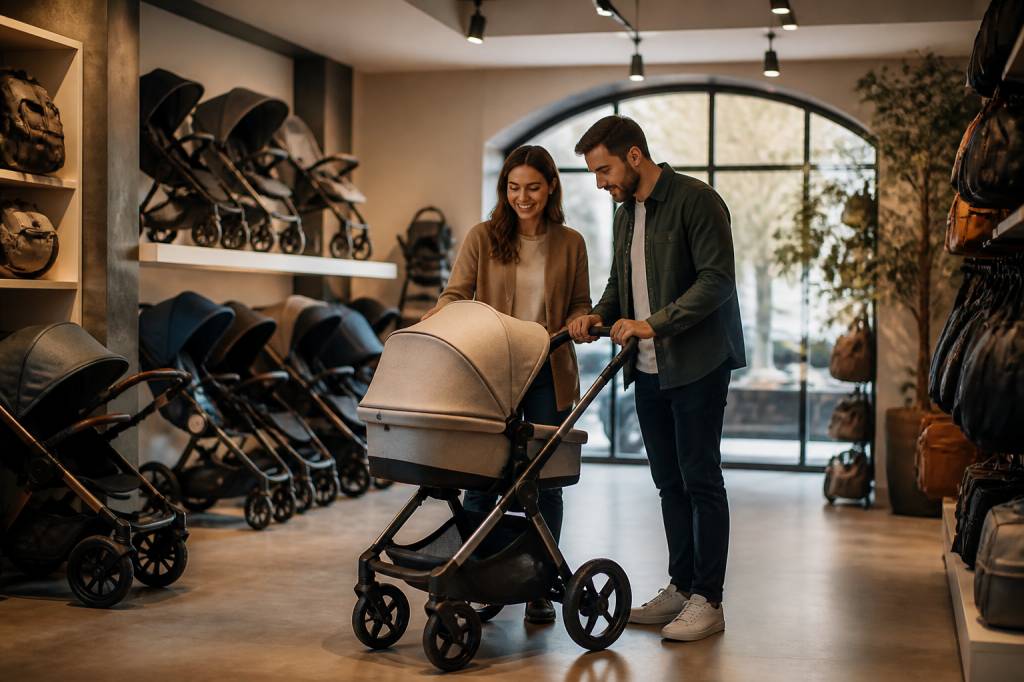
Online reviews are useful, but they cannot tell you how a stroller feels when you actually push it. A good buggy store gives you the chance to test the weight, maneuverability, handle height, and folding process in person. This matters more than people often realize.
One stroller may look perfect on paper and still feel awkward if the handle is too low, the fold is clunky, or the wheels catch every time you turn. Another may seem ordinary online and become a favorite the moment you test it because it glides smoothly and folds in a single motion. Small details matter when they’re repeated every day.
When visiting a store, try to:
If you have a baby or toddler with you, their reaction can be informative too. Sometimes a child’s immediate delight at “their” stroller tells you just how often you’ll be hearing, “Can we go for a walk?” Sometimes, less charmingly, it tells you they prefer the box. Children are wonderfully honest that way.
Choose stores that match your budget without pressure
Baby gear can be expensive, and stroller shopping can feel especially fraught when prices range from modest to astonishing. The best stroller stores respect your budget and help you stay grounded. They should not make you feel as if choosing a less expensive model is a sign of poor parenting. It isn’t. A stroller that fits your family well is more valuable than one that simply has a luxury name attached to it.
Look for stores that clearly display price ranges and explain what you’re paying for. Are you getting better suspension, a lighter frame, more durable fabric, or stronger compatibility with accessories? A thoughtful retailer helps you understand the difference between “premium for the sake of premium” and “premium because it will genuinely improve daily life.”
It also helps when stores offer:
If a stroller store makes you feel hurried into a decision, take a breath. Families make enough fast choices in a day. The stroller should not be one of them.
Pay attention to the store’s return and warranty support
A stroller can seem perfect in the showroom and still reveal its quirks after a week of real use. Maybe it doesn’t fit well in your trunk. Maybe the cup holder is oddly placed. Maybe the seat angle works beautifully for naps but not for an alert baby who wants to survey the world like a tiny commuter. This is why return policies and warranty support matter so much.
Before buying, ask these practical questions:
A dependable stroller store will answer these questions clearly. Better still, it will provide the information in writing. Baby gear should come with peace of mind, not a scavenger hunt through fine print.
Consider whether the store offers the right accessories and guidance
The stroller itself is only part of the story. Families often need rain covers, cup holders, organizers, adapters, snack trays, mosquito nets, winter footmuffs, or a second seat for a growing sibling. A good store knows that stroller life is rarely one-size-fits-all.
Stores that carry compatible accessories can make your life much easier. Instead of ordering from three different sites and hoping everything fits, you can get a full setup with expert help. That matters when you’re already coordinating diapers, naps, meals, and the mysterious disappearance of every tiny sock in the house.
Helpful stores will also tell you which accessories are truly useful and which ones are optional extras that look appealing but may sit in a drawer. That kind of honesty is worth a lot.
Don’t underestimate customer service
Customer service is often the hidden difference between a store that feels supportive and one that leaves you exhausted. Stroller shopping can be emotional. For many parents, it sits at the intersection of practicality, identity, and hope. You are not just buying a product; you are preparing for outings, routines, naps on the move, and the life you’re building with your child.
Good customer service feels calm, patient, and informed. It means staff listen more than they talk. It means they understand that new parents may ask the same question twice because sleep deprivation has made memory a little slippery. It means no one acts annoyed when you want to compare three nearly identical models for the fourth time.
Signs of strong service include:
In many ways, the way a store treats you before the sale is a clue to how it will treat you after. That clue matters.
Check the store’s reputation beyond the showroom
Before committing, spend a little time looking at reviews, parenting forums, and social media feedback. Not every review will be helpful, of course. Some are written in the heat of a bad nap. Others may be overly glowing for reasons that have little to do with the actual shopping experience. Still, patterns are useful.
Look for repeated mentions of:
If several parents say the same store was especially helpful with stroller selection for small spaces, twins, or frequent travel, that information can save you a lot of time. Similarly, if a shop is repeatedly described as difficult to contact after purchase, that’s worth noting. A stroller store should make your life easier, not create a side quest.
Think about online convenience versus in-person experience
Many families now use a mix of online and in-store shopping, and that can be the best of both worlds. An online store may offer broader selection and easier price comparison, while a physical store gives you the benefit of touch, testing, and human guidance. The best stroller retailers often combine both.
If you shop online, look for detailed product descriptions, clear images, video demonstrations, and easy comparison tools. A well-designed site should tell you stroller dimensions, weight, folded size, and compatibility information without making you dig through confusing menus.
If you shop in person, make sure the store still has the convenience features you need:
For many parents, the ideal store is one that lets you research from the sofa during nap time, then test the shortlisted options on a Saturday morning when everyone has eaten breakfast and the world feels momentarily manageable.
Notice whether the store understands different stages of parenting
Not every family shopping for a stroller is doing so for the first time. Some are expecting a second baby. Others are planning ahead for twins, travel, or a transition from infant carrier to toddler seat. A good stroller store respects these different stages instead of assuming every customer needs the same starter package.
That kind of understanding matters. A first-time parent may want reassurance about simplicity and safety. A seasoned parent may care more about durability, compact folding, or compatibility with older siblings. Grandparents, caregivers, and relatives buying a stroller as a gift may need especially clear guidance.
The most helpful stores adapt to the parent in front of them. They do not speak in generic baby-language. They ask real questions and offer useful answers. That is often the sign of a shop that truly understands family life.
Trust the store that makes you feel calm, not overwhelmed
At the heart of stroller shopping, there is a quiet truth: the right store should reduce stress, not add to it. You should leave feeling clearer, not more confused. You should feel as if someone helped you narrow the options in a thoughtful way, not as if you survived a sales pitch.
The best stroller stores balance expertise with empathy. They know that choosing baby gear is not just a transaction. It is part of building the everyday structure that helps a family move through the world with a little more ease. And in early parenthood, ease is precious.
So when you begin your search, give yourself permission to be selective. Ask questions. Test the stroller. Read the policy pages. Compare stores. Trust your instincts. The right retailer will respect your time, your budget, and your need for clarity.
In the end, the best buggy shop is the one that helps you picture ordinary days more beautifully: the park walk after lunch, the grocery run that doesn’t unravel, the sleepy baby who drifts off after a smooth ride, the toddler who climbs in proudly as if the stroller were a tiny chariot built for adventure. That is what thoughtful stroller shopping is really about. Not just buying wheels, but choosing a small daily companion for the life you are already building.